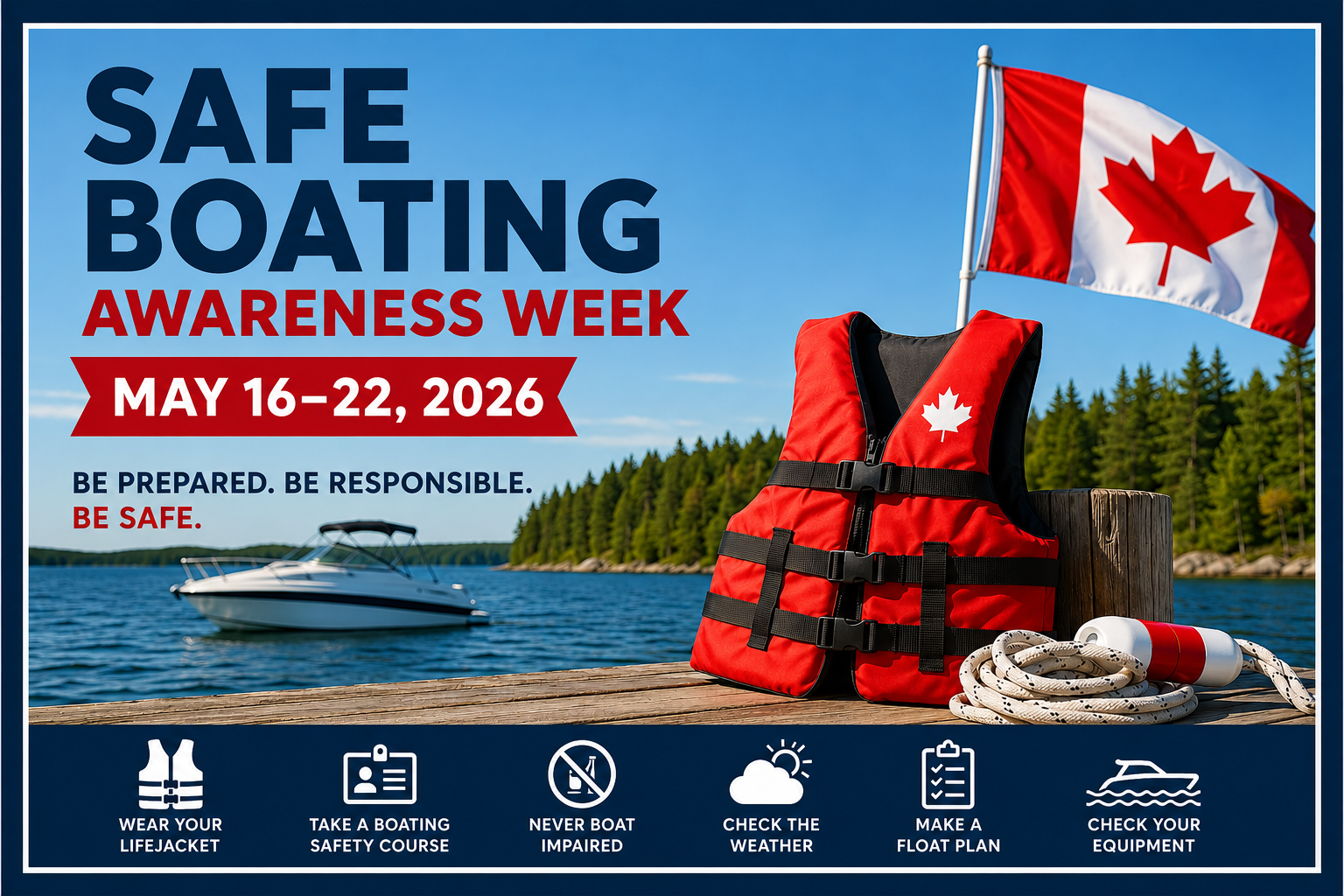
Each year, thousands of Canadians head out on the water to enjoy boating, fishing, paddling, and other water activities. Safe Boating Awareness Week, taking place May 16–22th, 2026, serves as an important reminder that boating safety starts before you leave the dock.
Led in Canada by the Canadian Safe Boating Council, Safe Boating Awareness Week focuses on promoting responsible boating practices and reducing preventable accidents, injuries, and drownings.
At CanadaBoatSafety.com, we believe boating should be safe, enjoyable, and accessible for everyone — whether you’re operating a fishing boat, pontoon, sailboat, PWC, or kayak.
Why Safe Boating Awareness Week Matters
Canada has millions of recreational boaters, and every season new boaters take to the water for the first time. While boating is an incredible way to enjoy Canada’s lakes, rivers, and coastlines, accidents can happen quickly when proper safety precautions are ignored.
Many boating incidents are preventable and often involve common factors such as:
-
- Not wearing a lifejacket
- Alcohol or drug impairment
- Lack of boating education
- Cold water shock
- Poor trip planning
- Excessive speed or operator inexperience
Safe Boating Awareness Week is designed to encourage all boaters to refresh their safety knowledge before the busy summer boating season begins.
Top Safe Boating Tips for 2026
1. Always Wear a Lifejacket
A properly fitted, approved lifejacket is one of the most important pieces of boating safety equipment. Many boating-related drownings occur because lifejackets were not worn or were stored instead of being used.
Modern inflatable and low-profile lifejackets are more comfortable than ever, making it easier to wear one at all times while on the water.
2. Take a Boating Safety Course
Education saves lives. Completing an accredited boating safety course helps boaters better understand:
-
- Navigation rules
- Emergency procedures
- Required safety equipment
- Weather awareness
- Responsible boating practices
In Canada, operators of powered recreational boats require a Pleasure Craft Operator Card (PCOC), commonly referred to as a boating license.
3. Never Boat Impaired
Alcohol and drugs significantly affect judgment, reaction time, balance, and coordination — all critical when operating a boat. Impaired boating is both dangerous and illegal.
Remember: the effects of sun, wind, waves, and dehydration can intensify impairment on the water.
4. Prepare for Cold Water
Even during spring and summer, Canadian waters can remain dangerously cold. Cold water shock can occur within seconds of unexpected immersion. Wearing a lifejacket and dressing appropriately for water temperatures can save your life.
5. Check Your Safety Equipment
Before every trip, inspect your vessel and ensure you carry all legally required safety equipment, including:
-
- Lifejackets/PFDs
- Sound-signalling device
- Fire extinguisher
- Navigation lights
- Bailer or bilge pump
- Heaving line
6. Monitor Weather Conditions
Weather can change quickly on the water. Always check marine forecasts before heading out and keep an eye on changing conditions throughout your trip.
7. File a Float Plan
Tell someone where you’re going, who is onboard, and when you expect to return. A simple float plan can make a major difference in an emergency.
Wear Your Life Jacket at Work Day — May 15, 2026
Before Safe Boating Awareness Week officially begins, many organizations participate in “Wear Your Life Jacket at Work Day” on May 15, 2026. Boaters across North America are encouraged to wear their lifejackets at work or at home and share photos on social media to help promote boating safety awareness.
Make 2026 Your Safest Boating Season Yet
Whether you’re brand new to boating or a seasoned captain, boating safety should always come first. Safe Boating Awareness Week is a great opportunity to refresh your knowledge, inspect your equipment, and encourage friends and family to boat responsibly.
Before your next trip:
- Review boating safety rules
- Ensure your equipment is up to date
- Wear your lifejacket
- Stay sober
- Take a boating safety course if needed
Together, we can help make Canada’s waterways safer for everyone.
Ready to get certified for the boating season?
Visit CanadaBoatSafety.com to complete your accredited online boating safety course today.