Find out exactly what safety equipment your boat needs in Canada, from paddleboards and PWCs to 12-metre cruisers, and build your own printable checklist in seconds.
Every boat on Canadian waters has to carry a minimum set of safety equipment, and that includes canoes, kayaks and paddleboards. It’s one of the most common things boaters get wrong, and one of the most common reasons for a ticket during an on-water check.
From cottage lakes in Muskoka to the open water of Georgian Bay and the BC coast, the rules are the same across the country. They come from Transport Canada’s Small Vessel Regulations, and they apply whether you own, rent or borrow the boat.
The good news? Once you know your boat’s type and length, the list is short and easy to check. Here’s everything you need to know about required boat safety equipment in Canada, with a checklist tool at the end to build your own list.
How the Equipment Rules Work
Your required equipment depends on two things: what kind of boat you have (human-powered, personal watercraft or power/sail) and how long it is. The bigger the boat, the longer the list.
Whatever you carry must meet three conditions. If any item fails one of them, it’s treated the same as not having it at all.
Every required item must be:
- Canadian-approved, where approval is required (lifejackets, PFDs, flares, lifebuoys)
- In good working order and maintained to the manufacturer’s instructions
- Readily accessible, not buried under coolers and tow ropes
Safety Tip: Flares (pyrotechnic distress signals) expire four years after their date of manufacture. Check the date stamp on every flare before your first trip of the season.
1. Canoes, Kayaks, Paddleboards and Other Human-Powered Craft
Paddlers often assume the rules don’t apply to them, but a canoe, kayak or rowboat used to get from place to place is a vessel under the regulations.
Canoes, kayaks and rowboats up to 6 m need:
- One Canadian-approved lifejacket or PFD of the right size for each person
- One reboarding device, unless the climb back aboard is 0.5 m (1′8″) or less
- One buoyant heaving line at least 15 m (49′3″) long
- One bailer or manual bilge pump
- One sound-signalling device, such as a pealess whistle
- Navigation lights if you paddle after sunset, before sunrise or in fog
- A magnetic compass if you’ll be out of sight of navigation marks
Stand-up paddleboards, paddleboats, watercycles and sealed-hull (sit-on-top) kayaks get a shorter list. If everyone is wearing a lifejacket or PFD, you only need a sound-signalling device, plus a watertight flashlight if you’re out after dark or in poor visibility.
Paddling Tip: Clip a pealess whistle to your PFD’s zipper pull. That way your sound-signalling device is always on you, even if you end up in the water.
2. Personal Watercraft (PWCs)
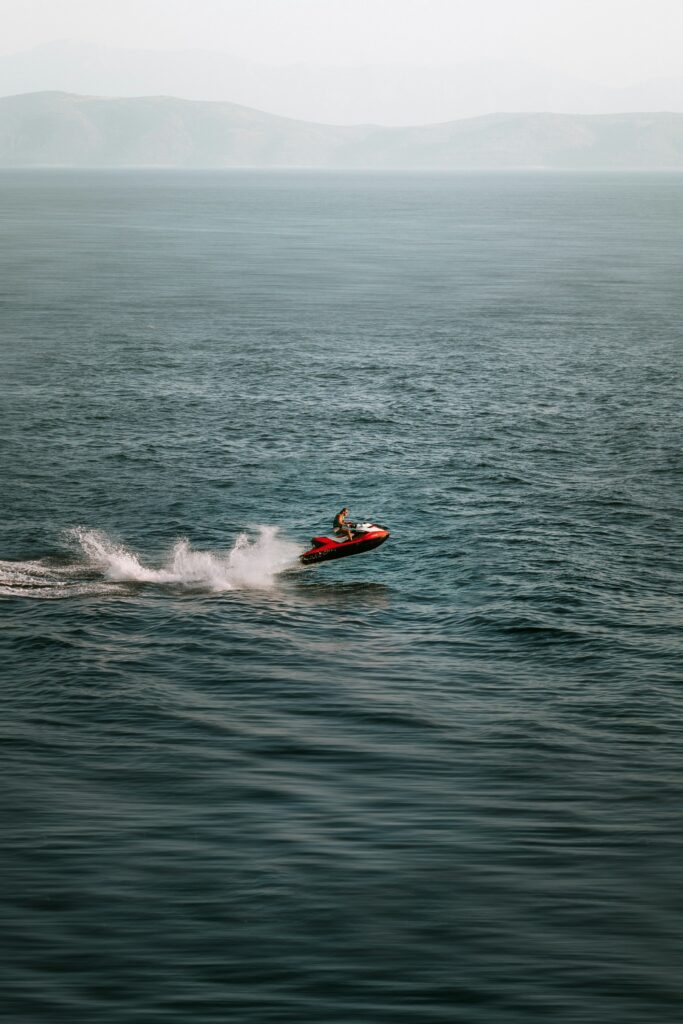
A personal watercraft (PWC), often called a Sea-Doo or jet ski, follows its own simplified rule. If every person on board is wearing a lifejacket or PFD, the list is short.
If everyone on board is wearing a lifejacket or PFD:
- Wear one Canadian-approved, properly sized lifejacket or PFD per person
- Carry one sound-signalling device
- Carry one watertight flashlight OR three approved flares (no more than one smoke signal)
- Carry a magnetic compass if you’ll be out of sight of navigation marks
- Use navigation lights if operating after sunset, before sunrise or in poor visibility
If anyone isn’t wearing one, your PWC needs the full list for powered boats up to 6 m (below). Not sure whether your craft counts as a PWC? See the difference between a boat and a PWC.
PWC Tip: Inflatable PFDs don’t count on a PWC. Choose an inherently buoyant (foam) lifejacket or PFD, and remember you must be 16 or older to operate a PWC in Canada.
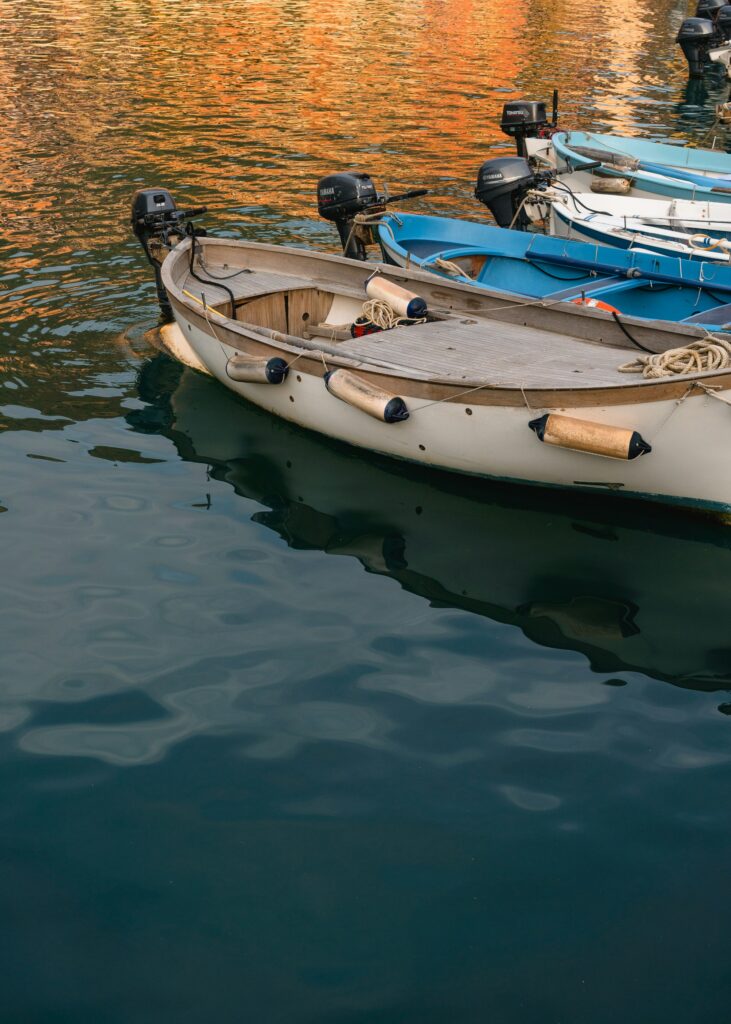
3. Power and Sail Boats Up to 6 m (19′8″)
This is the size class that covers most fishing boats, bowriders, small runabouts and day sailers at Canadian cottages and marinas.
Your up-to-6-metre checklist:
- One Canadian-approved lifejacket or PFD of the right size for each person
- One reboarding device, unless the climb back aboard is 0.5 m or less
- One buoyant heaving line at least 15 m (49′3″) long
- One watertight flashlight OR three approved flares (no more than one smoke signal), if the boat has a motor
- One manual propelling device (like a paddle) OR an anchor with at least 15 m of rope, cable or chain
- One bailer or manual bilge pump
- One sound-signalling device
- Navigation lights if operating after sunset, before sunrise or in poor visibility
- A magnetic compass if you’ll be out of sight of navigation marks
- One Class 5BC fire extinguisher if you have an inboard engine, a fixed fuel tank or a fuel-burning stove, heater or fridge
Safety Tip: A fire extinguisher isn’t required on many small outboard boats, but it’s inexpensive peace of mind. Many experienced boaters carry one anyway.
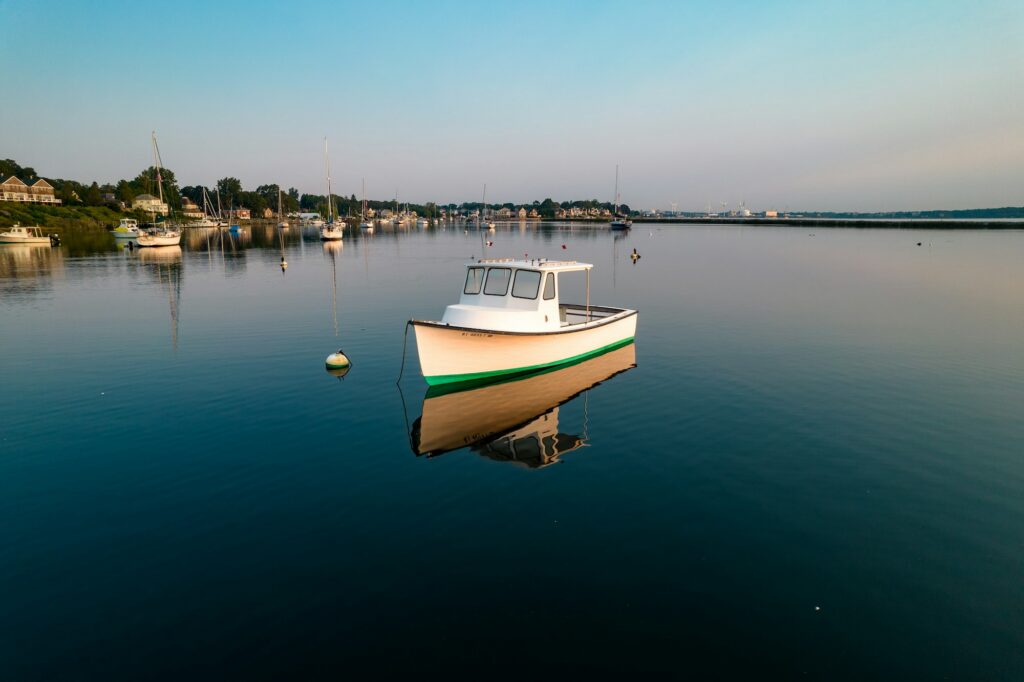
4. Power and Sail Boats Over 6 m and Up to 9 m (19′8″–29′6″)
Once you’re past 6 metres, the rules add a lifebuoy option, more flares and a fire extinguisher on every powered boat.
Your 6-to-9-metre checklist:
- One Canadian-approved lifejacket or PFD of the right size for each person
- One reboarding device, unless the climb back aboard is 0.5 m or less
- One buoyant heaving line at least 15 m long OR one lifebuoy attached to a buoyant line at least 15 m long
- One watertight flashlight AND six approved flares (no more than two smoke signals)
- One manual propelling device OR an anchor with at least 15 m of rope, cable or chain
- One bailer or manual bilge pump
- One sound-signalling device
- Navigation lights if operating after sunset, before sunrise or in poor visibility
- A magnetic compass (not required if your boat is 8 m or less and stays within sight of navigation marks)
- One Class 5BC fire extinguisher if power-driven, plus one more if you have a fuel-burning appliance
5. Power and Sail Boats Over 9 m and Up to 12 m (29′6″–39′4″)
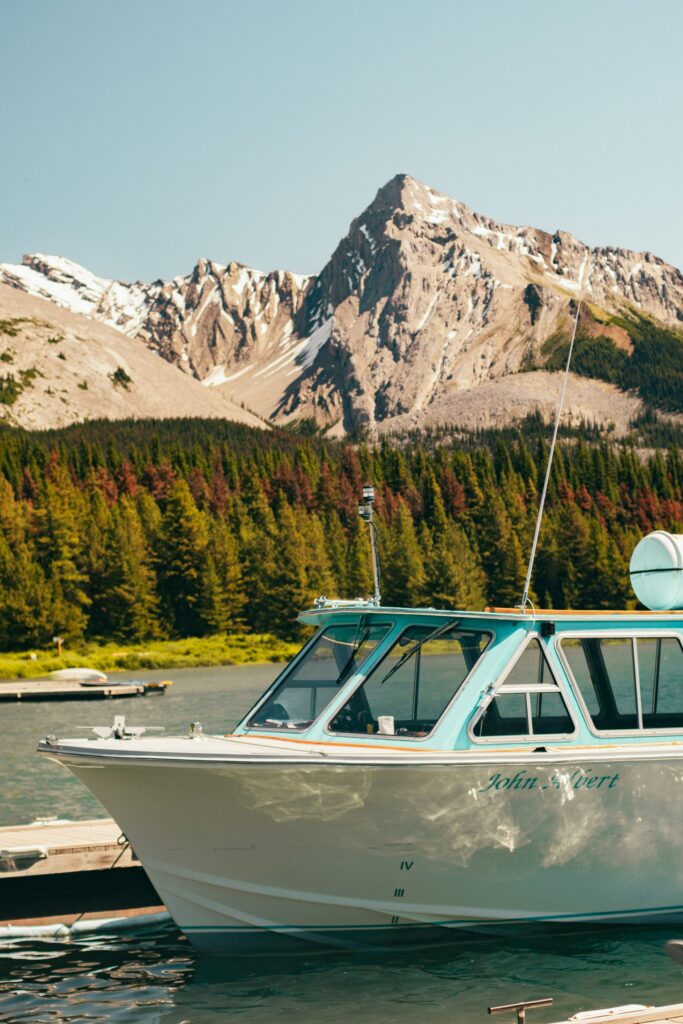
Cruisers and larger sailboats carry the most extensive list in this guide. Navigation lights and a compass are required at all times, and the extinguisher rating goes up.
Your 9-to-12-metre checklist:
- One Canadian-approved lifejacket or PFD of the right size for each person
- One reboarding device, unless the climb back aboard is 0.5 m or less
- One buoyant heaving line at least 15 m long AND one lifebuoy attached to a buoyant line at least 15 m long
- One watertight flashlight AND twelve approved flares (no more than six smoke signals)
- One anchor with at least 30 m (98′5″) of rope, cable or chain
- One manual bilge pump or bilge-pumping arrangements
- One sound-signalling device, navigation lights and a magnetic compass
- One Class 10BC fire extinguisher if power-driven, plus one more if you have a fuel-burning appliance
Boats over 12 m need even more: larger anchors, lifebuoys with self-igniting lights, multiple 10BC extinguishers, an axe and buckets. Check the Small Vessel Regulations for the full list.
Quick Comparison: Required Equipment by Boat Length
| Equipment | Up to 6 m | 6–9 m | 9–12 m |
|---|---|---|---|
| Lifejacket or PFD (each person) | Yes | Yes | Yes |
| Reboarding device | Yes* | Yes* | Yes* |
| Heaving line / lifebuoy (15 m) | Heaving line | Heaving line or lifebuoy | Heaving line and lifebuoy |
| Watertight flashlight | Flashlight or 3 flares | Yes | Yes |
| Flares | See above | 6 | 12 |
| Anchor | 15 m line (or a paddle) | 15 m line (or a paddle) | 30 m line |
| Bailer or bilge pump | Yes | Yes | Yes |
| Sound-signalling device | Yes | Yes | Yes |
| Fire extinguisher | 5BC in some cases | 5BC if powered | 10BC if powered |
*Unless the climb back aboard is 0.5 m or less.
What About Flares? When You Can Carry Fewer (or None)
Flares are the item boaters ask about most. A few exceptions in the regulations can shrink or remove the requirement.
- No flares: if you operate only on a river, canal or lake where you can never be more than one nautical mile from shore
- No visual signals at all: for boats 6 m or less that have no motor
- Up to 50% fewer flares: on boats over 6 m with two-way radio, a 406 MHz personal locator beacon worn by the operator, or a 406 MHz EPIRB
Transport Canada also has a policy accepting approved electronic visual distress signals in place of some flares. Read the conditions carefully before you rely on one.
In short: flares help rescuers find you. If you can’t be seen, you can’t be helped.
Don’t Forget Your Paperwork
Safety equipment isn’t the only thing an officer will ask to see. Keep these on board in a waterproof bag:
- Carry your Pleasure Craft Operator Card (PCOC) or other proof of competency whenever you operate a powered boat
- Keep a copy of your Pleasure Craft Licence (PCL) on board if your boat is required to be licensed
- Bring proof of residency if you’re a non-resident boating in Canada
Remember: the PCOC is for the operator and the PCL is for the boat. Our guide to PCOC vs PCL and the new PCL rules explains the difference.
What Are the Fines for Missing Safety Equipment in Canada?
Fines are set in the federal Contraventions Regulations. As of the latest update, typical amounts include:
| Offence | Fine |
|---|---|
| Not enough properly sized lifejackets or PFDs | $200, plus $100 for each missing device |
| Missing required visual signals, vessel safety or navigation equipment | $200 |
| Missing required firefighting equipment | $200, plus $100 for each missing piece |
| Equipment not in good working order or not readily accessible | $200 |
| Operating without proof of competency, or without it on board | $250 |
| No copy of the Pleasure Craft Licence on board | $250 |
Fines can add up quickly when more than one item is missing, and amounts can change. Check the regulations for the current figures.
The rule of thumb: if it’s required, it must be on board, working and within reach every time you leave the dock.
Build Your Boat’s Checklist
Use the tool below to build a checklist for your boat. Choose your boat type, tick what applies and print the list to keep in your boat’s dry bag.
Build Your Boat’s Safety Equipment Checklist
Pick your boat type, tick what applies, and get your minimum required equipment list. Print it and keep it on board.
This tool summarizes the minimum requirements in Transport Canada’s Small Vessel Regulations for common recreational boats. It isn’t legal advice. Special cases (racing craft, boats over 12 m, commercial use) have different rules, so check the regulations for your exact vessel.
Stay Safe on Canadian Waters This Season
The minimum equipment list isn’t red tape. Every item is there because it helps you stay afloat, get back aboard, call for help or be found. Check your gear at the start of each season and again before longer trips.
Whether you’re a new boater or a seasoned captain, knowing what your boat needs is part of being a competent operator. If you’re getting a new boat or heading out for the first time, it’s also a great time to refresh your boating safety knowledge.
Get Your Canadian Boating Licence Online
Make sure you’re prepared before your next boating adventure!
At CanadaBoatSafety.com, we offer a Transport Canada–accredited online boating safety course to help Canadians earn their Pleasure Craft Operator Card (PCOC), the official name for what most people call a boating licence (or boating license, as it’s often searched).
Complete your boating safety training online, pass the official exam, and earn your PCOC, valid for life.
Get Your Boating Licence Online Today
Stay safe on the water